

The dirge of permitting reform grew louder this week with the release of the Senate’s new Bipartisan American Affordability and Jobs Act of 2026. BAAJA seeks to shorten permitting timeframes for energy and infrastructure projects. In broad strokes, it would compress federal environmental reviews, tighten the window for legal challenges, and let projects that clear permitting hold onto those permits absent extraordinary circumstances – the sort of certainty developers have wanted for years.
These ideas aren’t fresh but at a time when affordability and efficiency dominate the discourse, it’s a serious bill that may very well pass.
I’ve read smart people who think it’s great and equally smart people who think it stinks on ice. The truth is probably somewhere in the middle - less effective than hoped or harmful than feared. But this is only one example; states all across the country are undertaking “permit reform” efforts – including in my great state of New Jersey.
While slightly different, most approaches resonate around common themes of addressing real affordability and economic concerns, considering efficiency as the goal and seeking to advance projects generally. With agency capacity continuing to DOGE-ishly erode, calls for change are only going to grow louder and more forceful.
But what if there was a better answer to the question of permit reform? If we defined our goal as actually getting new clean energy infrastructure built, could we unlock a better compromise while increasing efficiency, lowering costs and building governmental capacity?
I think we can.
Which One Doesn’t Belong?
Do you remember the song?
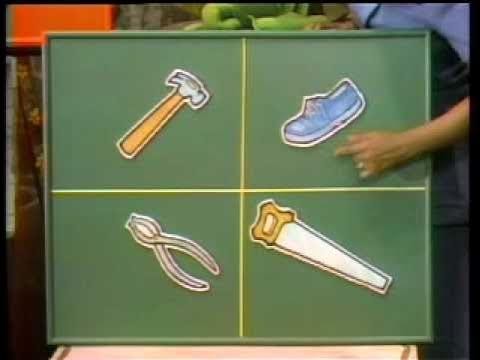
Let’s play Sesame Street with four “truths” of environmental policy:
[Which one of these things is not like the other….]
1. Climate change is an urgent threat that will alter the way we occupy our planet and severely impact our natural resources.
2. Combating a threat of this magnitude requires extraordinary measures including an unprecedented development of renewable energy resources along with the attendant grid upgrades and improvements necessary to deploy these resources to the grid.
3. At the same time, preparing for and adapting our communities to climate impacts requires a combination of nature-based and engineered solutions, flood control measures, infrastructure hardening, elevations and – ultimately – retreat from particularly impacted areas.
4. Our environmental laws exist to protect our natural resources and public safety through “content neutral” standards that treat all impacts are equivalent.
[Which one of these things doesn’t belong….]
Which one did you pick?
It’s 4, right?
Statements 1-3 describe a looming threat that requires us to take affirmative steps – and build things – to address it.
But 4 speaks to an environmental protection regime that: (1) arose from a movement to stop uncontrolled pollution and unfettered development; and (2) makes development that impacts resources take longer and cost more. One that applies the same standards to a fossil fuel pipeline as it does to an offshore wind interconnection cable. Our wetlands rules ask how many acres a project will disturb, not whether the thing being built is a gas line or the cable that carries clean power ashore. We count the impact; largely indifferent to the purpose.
Framed this way, the tension between what we need to build to address climate change and our standards of protection becomes palpable – the very resources and people we want to protect won’t survive if we don’t build the things we need to save them.
To be successful, we need to resolve this fundamental disconnect.
Quite the (Green) Dilemma
What I just described through semi-tortured, kid-show references, scholars Ruhl and Salzman more eloquently call the “Greens’ Dilemma”:
How can environmental law be reformed to facilitate building climate infrastructure faster without unduly sacrificing its core progressive goals of environmental conservation, distributional equity, and public participation?
Relying on the 2021 Net-Zero America report, they provide a succinct summary of the scale of the problem: “siting and interconnecting new renewable and storage plants [will be required] at rates of three to six times recent levels, potentially doubling or tripling the capacity of the transmission system.” They further argue that this need requires “reconsidering the ‘Grand Bargain’ of the 1970s that established stronger environmental protection in exchange for more challenging infrastructure development.”
In the view of Michael Gerrard – whose “Time for Triage” is equally critical to this conversation – we are suffering from “tradeoff denial” when we fail to consider allowing natural resource impacts to facilitate necessary clean energy infrastructure.
Untying the Knot
Quite the knot we’ve tied for ourselves, isn’t it?

How do we untie it?
As we’ve discussed, most proposals take an Alexandrian approach of trying to slice right through it. A literal shortcut. Sure, simply slashing through the standards is easy but what does that get you besides a ball of useless string? Cutting the knot lowers standards for all projects with reform proposals most readily benefiting fossil fuel projects.
The hard – and meaningful – work is untying the knot.
To do so, we need to reassess content neutral laws designed for projects that impact resources but now delay those that will save them. We need ideas that build things we need without sacrificing our environmental bona fides.
Wait…what? You’re insane.
Sure, but that’s beside the point.
True insanity is expecting better reform proposals while protecting the knot rather than trying to untie it. Success requires us to develop a new, affirmative vision that speaks to the same concerns – affordability, jobs, efficiency – currently dominating debate while maintaining core environmental protections.
Gerrard calls it “triage.”
I call it “Public Interest Permitting.”
Principles of Public Interest Permitting
This isn’t the place to flesh out all the details but there are a set of core principles that define the approach. To that end, Public Interest Permitting…
1. Recognizes that all projects are not created equal:
Everything flows from a belief that projects providing higher-order environmental benefits (clean energy/climate resilience) that outweigh their immediate environmental impacts should be subject to different permitting standards (e.g. an offshore wind interconnection cable should not face the same environmental hurdles as a fossil fuel pipeline).
While this requires a rethinking of the “Grand Bargain,” once we expand our frame of reference beyond the immediate impacts to consider long term environmental benefits, an approach that differentiates based on project type remains consistent with the core conservation principles of our permitting laws.
Using the pipeline/cable example, imagine the project requires a wetlands crossing. Assuming a similar footprint, both projects would adversely impact the wetlands, triggering environmental review and an obligation to mitigate those impacts at a fixed ratio (> 1:1). But if we view the offshore wind cable as a critical component of an effort to ensure that wetlands continue to exist, our conservation goals can be met even if we adjust the standards to – for example – lessen or eliminate mitigation requirements.
Finally, the environmental benefit threshold guards against defining “public interest” too broadly to rely on non-environmental benefits. While something like economic development might be a foreseeable co-benefit, that alone would not clear the bar.
2. Defines Specific Project Types:
A carefully scoped list of environmentally beneficial project types is critical. Projects that could potentially meet the threshold would include things such as clean energy and its necessary infrastructure, grid enhancement and resilience, climate and flood resilience and resource restoration.
3. Creates Bespoke Project Standards:
To be successful the standards must be specific. Nebulous “public interest” standards that allow an agency to waive rules won’t work. That type of authority can – and has – been abused in the past.
Instead, public interest permitting requires the hard work of building specific standards for specific project types, piece-by-piece and with all stakeholders at the table. This work doesn’t happen overnight. But the time invested in creating clear, consistent and reliable regulatory standards informed by affected stakeholders, will pay off by institutionalizing efficiency and predictability into the permitting scheme.
This could look like a lesser wetland or habitat mitigation standard for offshore wind export cables, less intensive permit reviews, dedicated permit review teams and pathways or any number of other substantive and procedural measures designed to ensure that once developed the standards are settled. Ideally this process can be used to create a single, coherent set of standards in a single dedicated provision that alleviates the need to undertake a regulatory expedition just to understand what rules apply. The hard conversations happen up front with a path as clear for the fiftieth applicant as the first.
But this doesn’t require abandoning all attempts to avoid impacts. The price of admission for any public interest project is an analysis and consideration of how the project can be designed to avoid and, where not feasible, minimize impacts. Critically, this would include evaluating opportunities outside of already overburdened or disproportionately impacted communities.
The toll isn’t waived but certain projects can use EZPass.
4. Prioritizes Early Community Engagement:
By now this should be obvious: projects, particularly large-scale infrastructure, shouldn’t move forward (or even be reviewed) before talking to the members of the host community.
Requiring early, direct and meaningful public engagement during project development and scoping should be a mandatory component of any project specific standard. This ensures that project proponents understand (and address) community concerns during design while also facilitating a positive – and trust-building – feedback loop for communities who see their concerns accounted for.
And this is more than a feeling. Studies have shown that early engagement will actually “avoid extended delays or project cancellations” and can reduce backlog, while also increasing thoroughness. Whether your interest in permitting reform is increasing efficiency or protecting communities, there really is no other place to start.
5. Recognizes that Place Matters:
Just as project type should matter in environmental review, so should its location. We cannot credibly assert that any project is environmentally beneficial if we fail to consider whether the project is located in or may otherwise contribute to a disproportionate burden already borne by a host community.
Mandatory consideration of cumulative impacts is the best answer we have to address these inequities. Fortunately, a growing number of state-level cumulative/disproportionate impacts approaches can be effectively incorporated.
While impacting resources may be appropriate, repeating past sins by further burdening communities that already bear more than their fair share is not.
6. Connects to Planning:
Everybody loves a well-crafted, publicly vetted plan. And if the government is going to go through the trouble of endorsing a planned approach, the regulatory approach should show some love as well.
Adherence to things like regional grid planning or a comprehensive coastal resilience plan should benefit a project during permitting. When our regulations incentivize better, more thoughtful patterns of development we all win.
7. Builds Agency Capacity:
A lack of agency capacity (people, money, resources, technology) remains both a significant constraint on progress and a primary driver of dissatisfaction with permitting timelines. We can and should invest in our government rather than starve it until it fails and the public loses faith. But creating better permitting pathways for desirable projects will lessen resource strains while delivering real, tangible benefits. Trust is earned through results.
8. Grows New Coalitions:
Rarely do you find infrastructure developers, labor, utilities, rate payers and environmentalists on the same side of an issue. But by focusing on the shared interest of these seemingly unaligned groups, new, powerful coalitions can be built around the idea of building the things we need. Rather than fracture, we can come together.
9. Considers Preemption:
This will be controversial but only so much progress can be made without taking on the issue of local zoning, land use and opposition. The Sabin Center’s latest edition of “Opposition to Renewable Energy Facilities in the United States” finds local restrictions remain a significant barrier to clean energy projects. The report finds more than 800 local ordinances restricting renewable energy development, hundreds of projects facing significant local opposition and a 40% project cancellation rate.
While prioritizing early engagement can help alleviate project-specific concerns and consideration of cumulative impacts can protect the most vulnerable communities, structural barriers remain. Things like restrictive ordinances that prevent clean energy projects demand consideration of tools like preemption. Pursuing the idea would certainly be controversial but not unprecedented. New Jersey’s municipal land use law, which governs local zoning, allows the state to preempt the applicability of local zoning laws to public utilities where “reasonably necessary for the service, convenience or welfare of the public.” This reflects a recognition that, even in a “home rule” state, some projects should not be subject to the whim of a local veto. As we’ve defined them, public interest projects fall squarely within that category.
Cut or Untie?
Whether the Senate bill moves or not, the pressure on environmental protection isn’t going anywhere. Affordability, jobs, and efficiency will drive a permitting debate that we can’t win with “content neutral” reforms that provide an easy answer. By cutting the knot, we lose the reasons the knot existed in the first place - protection.
Public Interest Permitting is about untying by defining what we actually want built and creating protective but facilitative standards. By doing so, we can answer the same affordability-and-jobs demand the sword speaks to without trading away progress.
If we want a permitting system that builds the future, we need to stop defending the knot and start untying it.
I don’t have every strand worked out – but I’m convinced it beats the alternative.
If you want to do this, let’s talk.